Category Archives: Resource

113. Did the Little Thinkers get you thinking?

Did my Little Thinkers give you ideas for a lesson?

I hope so!

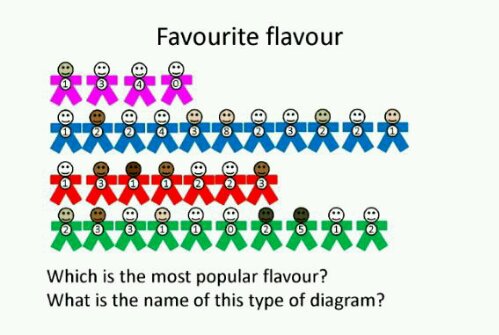
These are my little crisp people and they’ve been helping pupils learn for over a decade.

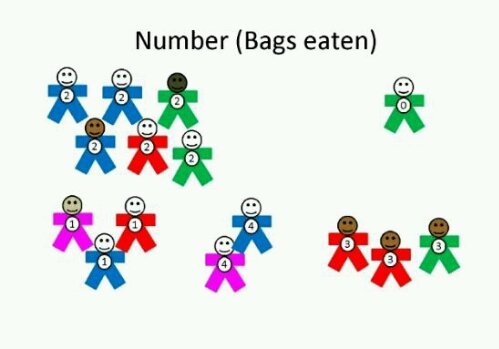
I first thought up this task when an interactive whiteboard and digital projector came in the form of an overhead projector. Using the brand new concept of colour printing onto inkjet OHP transparencies, we could move these little people around the board and investigate different problems. Each number represents the number of bags of crisps eaten in a week. Each colour represents a flavour (Blue = salt & vinegar, red = ready salted, green = cheese & onion, pink = prawn cocktail).

You can sort by number of bags eaten:
image

You can create a flavour pictogram:

image

In fact you can use this resource with KS2 & KS3 to investigate lots of topics:
Sorting by category (number/colour)
Ordering numbers
Pictograms
Venn diagrams
Carroll diagrams
Bar-charts
Averages
Questionning
Probability

And anything else you can think of.

I’ve created an editable template of figures, in three different sizes. You print them out and use them individually, in group work or on the wall. There is also a teacher guide on how to use the crisp people.

Enjoy!

Download your little people below:

Editable template  crisp-people-template-blank

Teacher guide and presentation crisp_people_guide
109. Bright vs Gifted

Is that girl bright? Is that boy gifted?

image

How can you tell? What is the difference?

This is one of those tricky areas that gets lumped together under the title ‘Gifted & Talented’. But what do we mean and how can we offer the best educational experience for them?

If you type ‘Bright Child vs Gifted Learner’ into Google you will find many websites listing the same characteristics. The bright children are easy to spot, the gifted learners can hid their talent behind disruptive behaviour and social awkwardness.

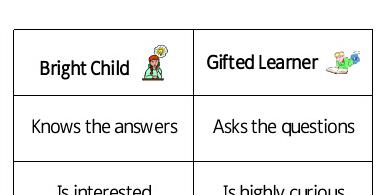
I don’t believe there is a ‘one size fits all’ definition of bright or gifted, but I do think it is worthwhile discussing their characteristics. I have made a discussion resource based on the varied resources available.
image

You could just print out the lists and discuss. You could ask people to pick out characteristics of a particular pupil and see if they consider them bright or gifted. You could do a simple card sort. However you do this, the process of thinking, reviewing and discussing is always useful.

Click here to download the resource.

104. Percentages shout out

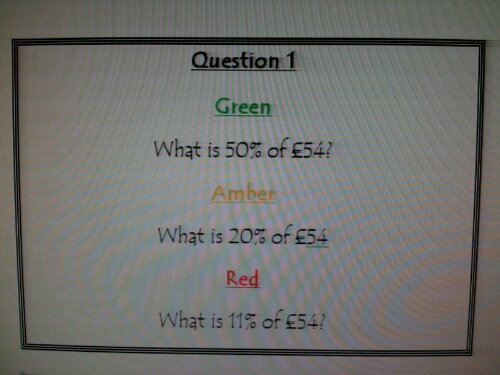
I used a great resource from Whidds at TES resources this week:

image

It’s a differentiated percentages trail. You or your students can set the level of difficulty using a neat traffic light system. The resource includes a powerpoint and two different activities.

Download it here.

Thank you to Whidds for sharing this great idea.

102. Can you stay out of the Boardroom?

The_Apprentice__The_Final

The Apprentice regularly features its contestants failing to listen to what people want, often with disastrous results.

  •  They carry out market research with the wrong people or not enough people.
  • They assume the people they are asking are brilliant or thick. Seriously, you won’t find a world class wine expert working in the local supermarket!
  • They don’t change their product to meet the needs of the people.
  • Worse than that – they ignore the brief!

It all of this leads to one place: The Boardroom

Can your pupils avoid being fired?

I’ve been using ‘The Apprentice’ as an inspiration for a data handling project for years and I’ve finally typed up a resource to go with it.

Download Would Lord Sugar invest in you? worksheet

86. Snapdragon & Resources

I’ve just started sharing resources on the Times Educational Supplement (TES) website.

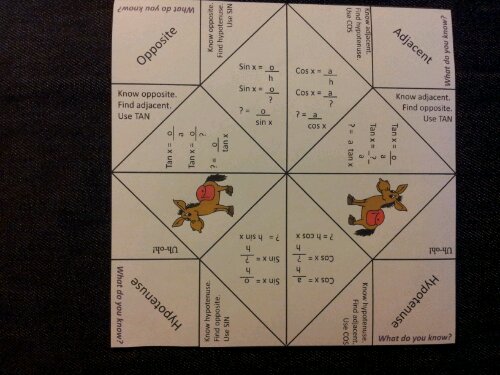
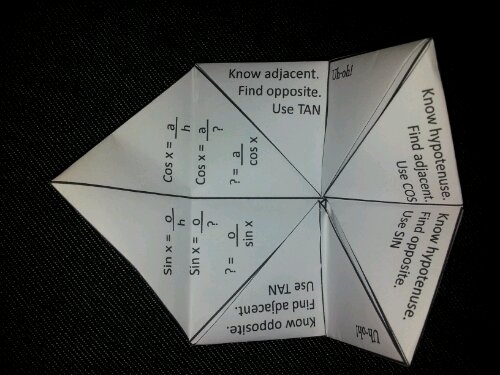
The first resource is a typed up version of the Trigonometry Snapdragon.
image

I’ve omitted the diagrams so you can have a discussion about what the different situations look like.
image

Update: I am hosting my own resources now so you can download the snapdragon here: Trigonometry snapdragon v2


73. Calculators: The New Hope

Shameless Stars Wars reference!

To explain: My Foundation GCSE class are finally realising that if they work, they might just get that elusive Grade D or even C. This is my ‘Hope’. They have been doing well with the D to C essential skills sheets by @MathedUp and are developing a positive attitude.

The ‘New’ thing is they have shown an interest in knowing how their* calculators work, for the calculator paper.

‘You mean that little button will work out powers for me?’!

* When I say their calculator I of course mean mine – they haven’t got as far as bringing in theirs from home!

Activity
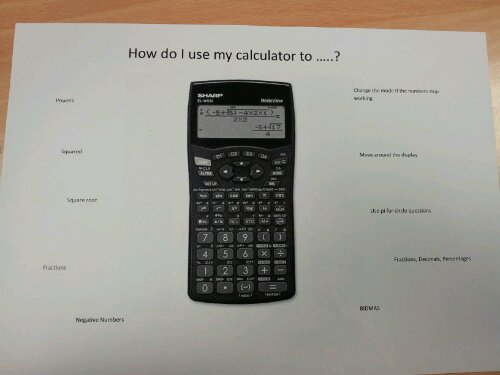
I used Google images to find a clear picture of the calculators we use in school. I put it in the middle of a page and surrounded it with common calculator topics/problems:

image

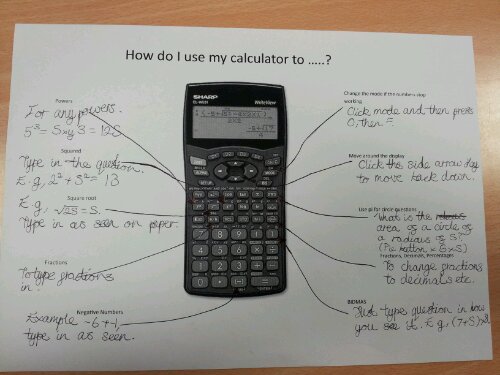
We discussed how to use the calculator with each problem. The best students labelled the buttons, gave instructions on how to use them and even asked me for simple examples for each case. This is an example of a pupil’s sheet:

image

I was very impressed by their attention to detail. I gave them no instruction on what to write and they produced good revision resources. This would be a good activity for KS3 as well as D/C border students.


Update: 21st November 2013

My worksheet is available here: How to use a Calculator

13. Trigonometry Snapdragon

I wanted to boost my students’  level of understanding of trigonometry without switching off their enthusiasm. We’d investigated the tan ratio practically and introduced sin and cos.

Now the tricky bit – how to make picking and rearranging trig rules interesting!

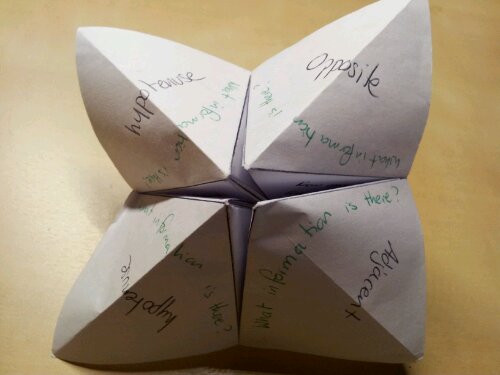
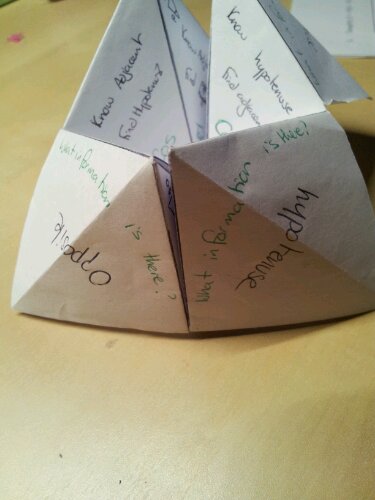
Introducing the Trigonometry snapdragon:

image

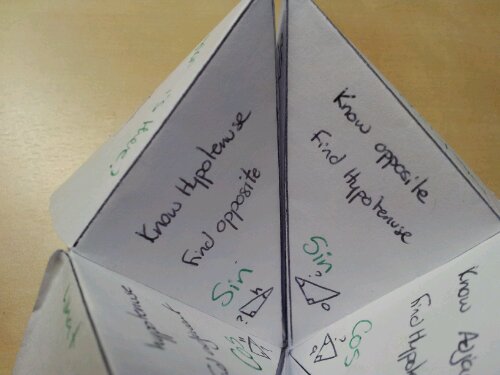
Pinch together the two things in the question eg opposite and hypotenuse.

image

Look inside the snapdragon at the pinched portions. Follow the instructions eg Sin rule: know hyp, find opp or know opp, find hyp

image

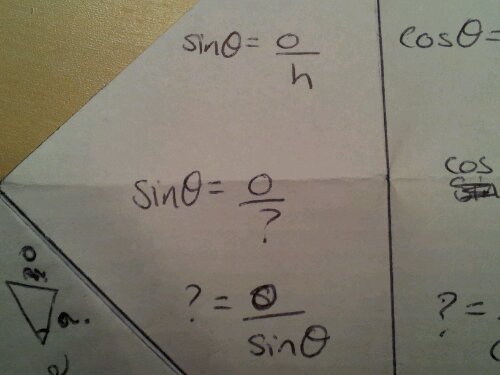
Unfold the appropriate section for your problem.

image

You now have the correct rule, rearranged for your problem.

image

Student Feedback
‘That is amazing’ and ‘Can I make one in the exam?’.

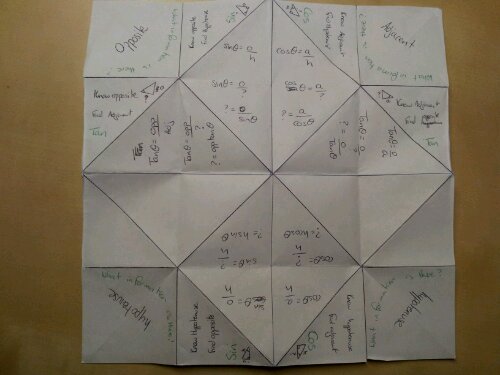
Download a digital version here: Trigonometry snapdragon v2

Also visit the updated snapdragon page for a blank template: Snapdragon fun