Category Archives: Resource

210. Most Wanted Percentages

I’ve been looking at how to teach percentage increase and decrease at Key Stage 3. If you can find 20%, you can obviously increase by 20% by adding it on. But does this reinforce the misconception that percentages are an addition, rather than multiplicative, function? I’ve started teaching multipliers for increase and decrease to a wider range of pupils, so it makes sense to introduce the concept earlier. I’ve used finding 120% as a way to increase by 20%. It opens up discussion as to why this works and pupils can form their own ideas on how to decrease.

muppets

Image Credit: www.te

To reinforce and practice the idea of increase and decrease by percentages I’ve created some ‘Muppets’ themed Top Trumps cards (not licensed). You can download them here: Muppets Top Trumps (pdf)

There are only eight cards, but you could print out one set per pupil and shuffle them.
208. Gadget of the week

Anyone who visits or uses my classroom knows that whatever equipment you will need to teach with will be there. I think it’s just good manners to keep everything tidy when you share a classroom.

One of my pet hates is mini-whiteboards, or rather the distribution and collection of them. If you weren’t in that classroom the lesson before, you don’t have the luxury of putting them out before pupils arrive. Some people keep them in plastic wallets with a board, pen and wiper in each. Great, until:
“My pen doesn’t work!”
“There is no wiper”
“There are no wallets left”

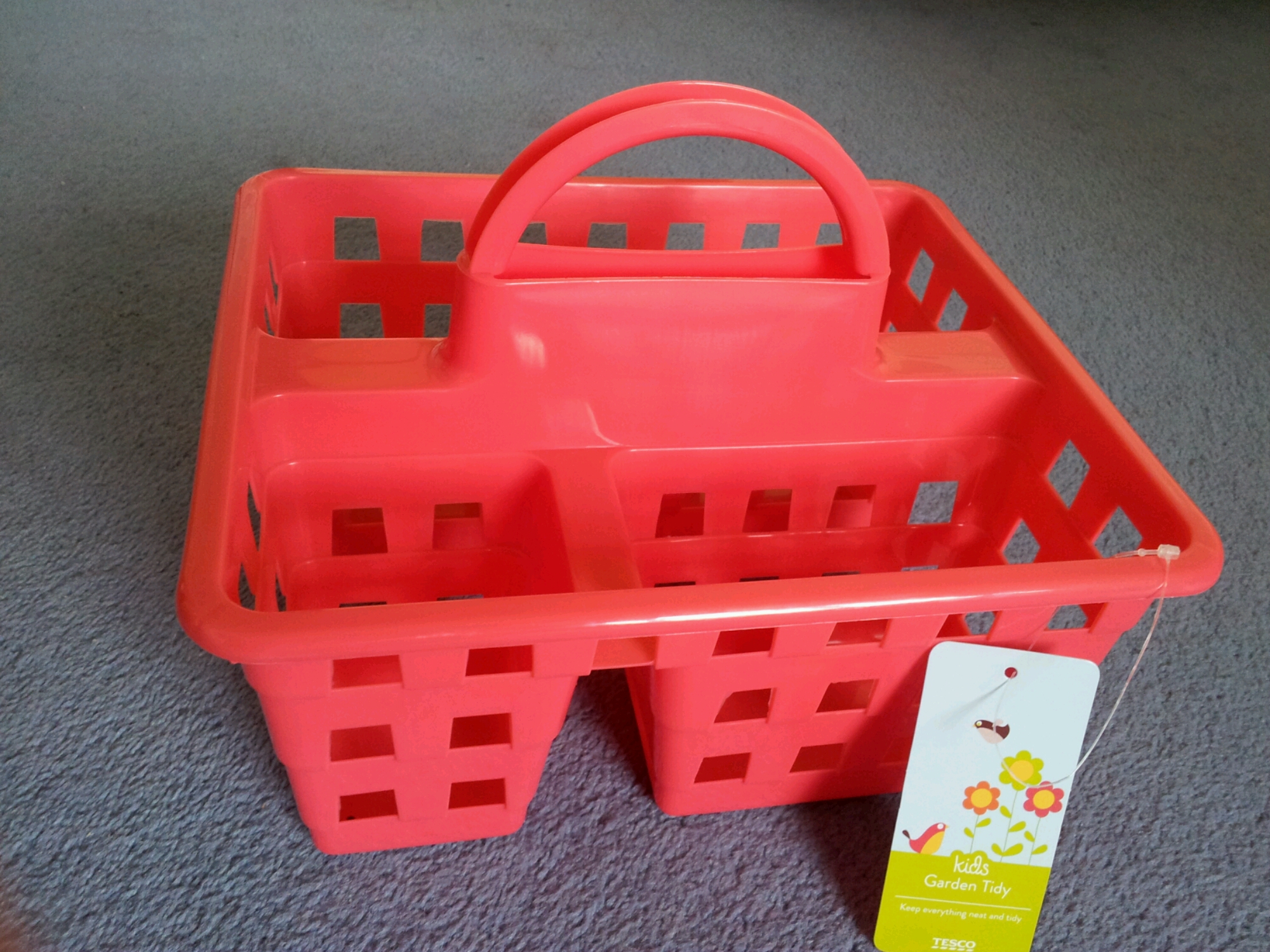
Last year I found an easy to manage solution in a supermarket – Kids Garden tidys (£2.50 – Tesco). They are back in stock for Spring.

image

The long section holds whiteboards, the small section is a perfect pen pot and the middle sized section holds mini sponges. Obviously this will depend on the size of your whiteboards.

If my tables are groups, I just put one of these baskets in the middle. If the desks are in rows I distribute them around the room – it saves a rugby scrum at the front. Collecting the boards in is much quicker and it is easy to have a couple of spare pens in each tidy in case one runs out.

The small size of these baskets makes them easier to store than the full size versions. As they have handles, they stack nicely when not in use. They could also be used for any class equipment: pencils, calculators and rulers maybe?

See what your local garden centre or supermarket has this Spring and have a Spring clean of your teaching space!

207. Is it on the formula sheet?

In the Autumn term I put together a booklet of all the Trigonometry and Differentiation rules that you need for the Core 3 (Edexcel) exam. It was a summary of key facts and highlighted what you need to learn vs what is on the formula sheet. The original post was 155.Trigonometry&Differention including links to the booklet.

One term on, at the request of students, I’ve produced the same kind of booklet for Core 4 Integration and Differentiation. Even if you don’t do the Edexcel exams, they are still helpful revision tools.

You can download the booklets here:

C4 Differentiation & Integration (docx)

C4 Differentiation & Integration(PDF)


202. Curling your A-Level

Whilst watching the Winter Olympics it occurred to me that the sport of curling would be an excellent discussion starter for teaching the motion of particles, momentum & impulse.

  • The motion of the curling stone on ice relates to F=ma.
  • The moment the player pushes off the hack, whilst still pushing the stone relates to the motion of connected particles.
  • The collision of stones relates to momentum and impulse.
  • The action of the sweeper changes the friction.

On YouTube I discovered this physics video by NBC Learning. They have many videos explaining the Science of the Winter Olympics.

I  pulled my ideas together in this Prezi, which allows plenty of student discussion: the task is blank for your own resource as I used a textbook.

200. Website/Resource of the week 4

Wow! This is proper blog post number 200. How should I mark this occasion? Why, by recommending another splendid site of course!

To quote the folks themselves: JustMaths is born from the passion and spirit of three full time teachers at the “most improved school in England” (January 2013).

The site has both free and subscription resources. The latest initiative is the ‘Bread & Butter’ worksheets. It consists of straight-forward starter worksheets to practice essential skills for students: Just Maths: Bread & Butter. My class use them every lesson and I’ve noticed a real improvement in their confidence and quality of solutions in just two weeks.

193. Resource of the Week – Reflective Detentions

This splendid resource by ealdor, on TES Resources, was recommended on Twitter last year. It is a Reflective Detention sheet. Pupils spend time in detention reflecting on what they did, why it wasn’t appropriate and what they will do to improve. The teacher then keeps the sheet as a record of the event. They can then be referred to at Parents Evening and in Departmental/Pastoral interventions.

image

Image credit: teachers.saschina.org

Personally I have used these sheets since September and they have provided me with a constructive talking point at Parents Evening. In fact, one parent described them as handwritten confessions that their child couldn’t talk their way out of. Thank you ealdor!