Category Archives: Resource

233. Summary Statistics

If you are reading this blog there is a high probability that you are a maths teacher – it is a maths education blog after all. That means data shouldn’t be scary … should it?

scary data

Image credit: http://mrcbaker.blogspot.co.uk/2013/08/data-doesnt-have-to-be-scary-how-you.html (This website is worth a look!)

In a world of performance tracking and data analysis, seeing the trends in class data should be easy. However busy lives and hectic timetables mean we often don’t get the time to step back and reflect on our classes.

I decided to pull together the summary data for each of my classes onto one page. I can see a profile of current and target grades (FFTD*), gender, SEN and Ever6** information in one table. The actual act of completing the table made me take a closer look at the abilities and issues within the class. I realise not everyone uses these data measures so the files are in .doc and .docx form. Since the data is summarised it remains relatively anonymous, making it a good discussion document for trainee teachers or CPD.

You can download a customisable form here:
Summary Data for class KS3 (doc)
Summary Data for class KS3 (docx)
Summary Data for class KS4 (doc)
Summary Data for class KS4 (docx)
Summary Data for class KS4 sample (doc)
Summary Data for class KS4 sample (docx)

*FFTD means Fischer Family Trust Data

**Ever6 is a UK measure related to eligibility for Pupil Premium funding (simplified description).

233. Stealthy Cone Investigation

I like to encourage students to discover rules and formulae for themselves. It’s important that students understand where the maths comes from so they can apply their skills effectively. They also don’t have to rely on remembering a rule (which they may forget when they are stressed).

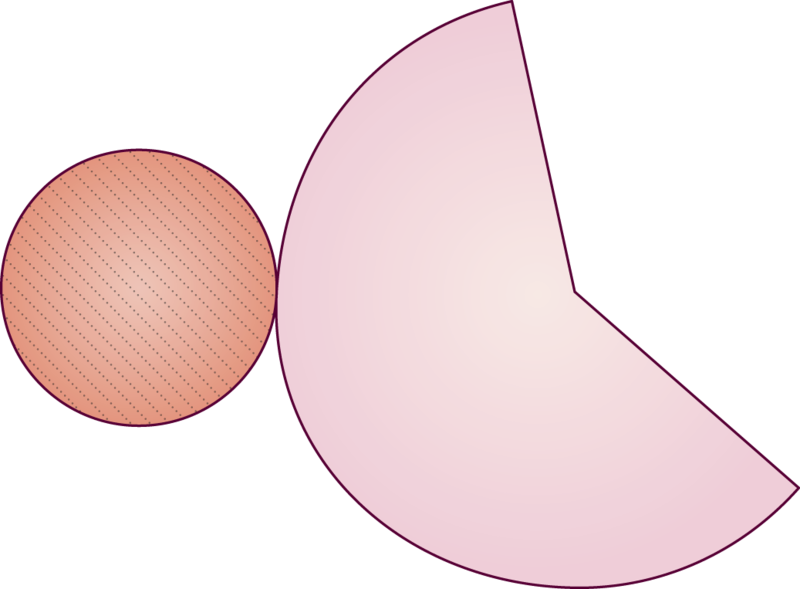
net of a cone

Image credit: http://www.ck12.org/geometry/Surface-Area-and-Volume-of-Cones/

This resource is a neat and effective way to investigate the surface area of a cone through measuring circles and creating a 3D shape. Students get a physical feel for how the dimensions fit together. Throughout the lesson I let students choose their degree of accuracy in cutting, measuring and calculating. Of course, when we discussed the ‘solution’ at the end of the session it was impossible for me to put one correct answer on the board. So I generalised using a and b for the radii – explaining that everyone could check their method in general terms. The lovely ‘penny drop’ moment happened when my a’s and b’s suddenly became a general rule. I’d conned the class into using algebra because of the accuracy issue.

Download the worksheet and answers here: Surface_area_of_a_cone

Hint: Copying onto coloured paper or card makes this activity stand out in their notes.

232. Steps in Volume

This is a quick little post to give you a nifty little resource inspired by the ideas of Bruno Reddy (@MrReddyMaths). I suggest you visit his website at: http://mrreddy.com/.

Sphere cone pyramid

Image Credit: http://k12math.com/math-concepts/algebra/volumes/volumes.htm

I’ve been teaching my class how to calculate the volume of spheres, cones and pyramids. They really like these staged worksheets. You could print them out as they are, but I personally print them as A5 booklets which fit into their books.

Volume of Sphere Cone Cylinder (pdf)

231. Fish Shop Maths

I’ve been using this idea since I first started teaching and I’ve finally got around to typing it up!

fish_chips

Image Credit:http://coachandhorsesn16.com/eat/fish-n-chips/

I introduce order of operations by creating an imaginary Chip Shop. I usually read out orders and get the students to write down what they think they are on whiteboards. Note that when you read out the orders, the punctuation doesn’t give any hints.

  • ‘Two fish and three chips’ – 2 fish & 3 portions of chips
  • ‘Fish and chips twice’ – 2 fish & 2 portions of chips or 1 fish & 2 portions of chips
  • ‘Five sausage and chips’ – 5 sausages & 5 portions of chips or 5 sausages & 1 portion of chips

This activity always prompts a ‘discussion’ as to who is correct. The misconception of what an order could mean links nicely with the misconception when working out 2 + 3 x 4. You could also adapt the idea for writing algebraic expressions.

A presentation, with questions, is downloadable in three different formats here:

Fish Shop BIDMAS (pptx)

Fish Shop BIDMAS (ppt)

Fish Shop BIDMAS (ppsx)


230. Resource of the week

I came across this splendid resource on Similar Triangles, by cturner16, on the TES website:
Similar triangles matching activity

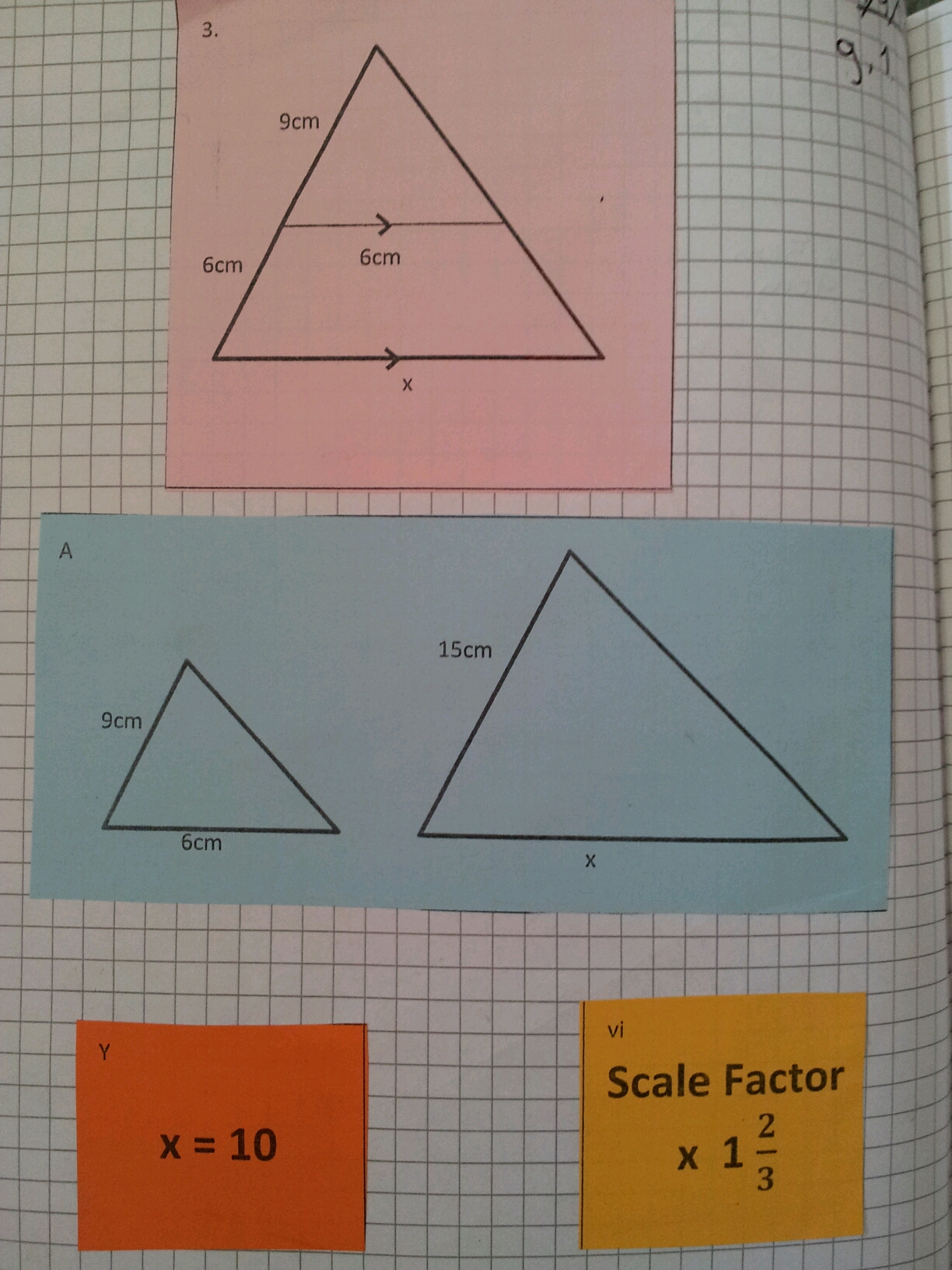
The cards start with a standard diagram of overlapping triangles and you match it up with the individual triangles. The final step is to work out the scale factor and the missing side. It follows the exact steps you would want students to follow when working on these problems.

Now, I know my class well and to avoid the standard bickering, mess and ‘I didn’t think you meant pick up every sheet when you said pick up every sheet’, I copied every set on a different colour:

image

The colour made it so much easier to manage and discuss. There are six problems, so if your students work in 2’s or 3’s, they each get 3 or 2 sets to stick in their book. The problems are full of misconceptions and interesting scale factors. I’m really glad I used it!

Thank you cturner16!

227. Back to School Bunting

Welcome back to the Sandpit! Hope you’ve had a good Summer!

It seems a shame not to keep that summer vibe going, so I thought I’d go back to an old post and reinvent it for a village fete, ‘Great British Bake Off‘, barbeque with friends feeling.

Back in post ’54. Space Saving Displays’(April 2013) I gave an instructional on how to make and use mathematical bunting. Over the summer some great teachers have shared how they are decorating their classrooms with their own twist on old fashioned bunting. I suggest you visit:

Just Maths @Just_Maths

Ideasfortheclassroom @missradders

Today’s post will give you three suggestions:

  1. Pupil orientated, maths or pastoral
  2. Ready made
  3. Teacher made, with downloadable templates and flags, with an emphasis on multiculturalism

So here we go:

1. Hands across the room

Equipment

  • Paper/card
  • Pens
  • Scissors
  • String/treasury tags

(a) On a sheet of A4 card, get pupils to draw around their hand open and closed:
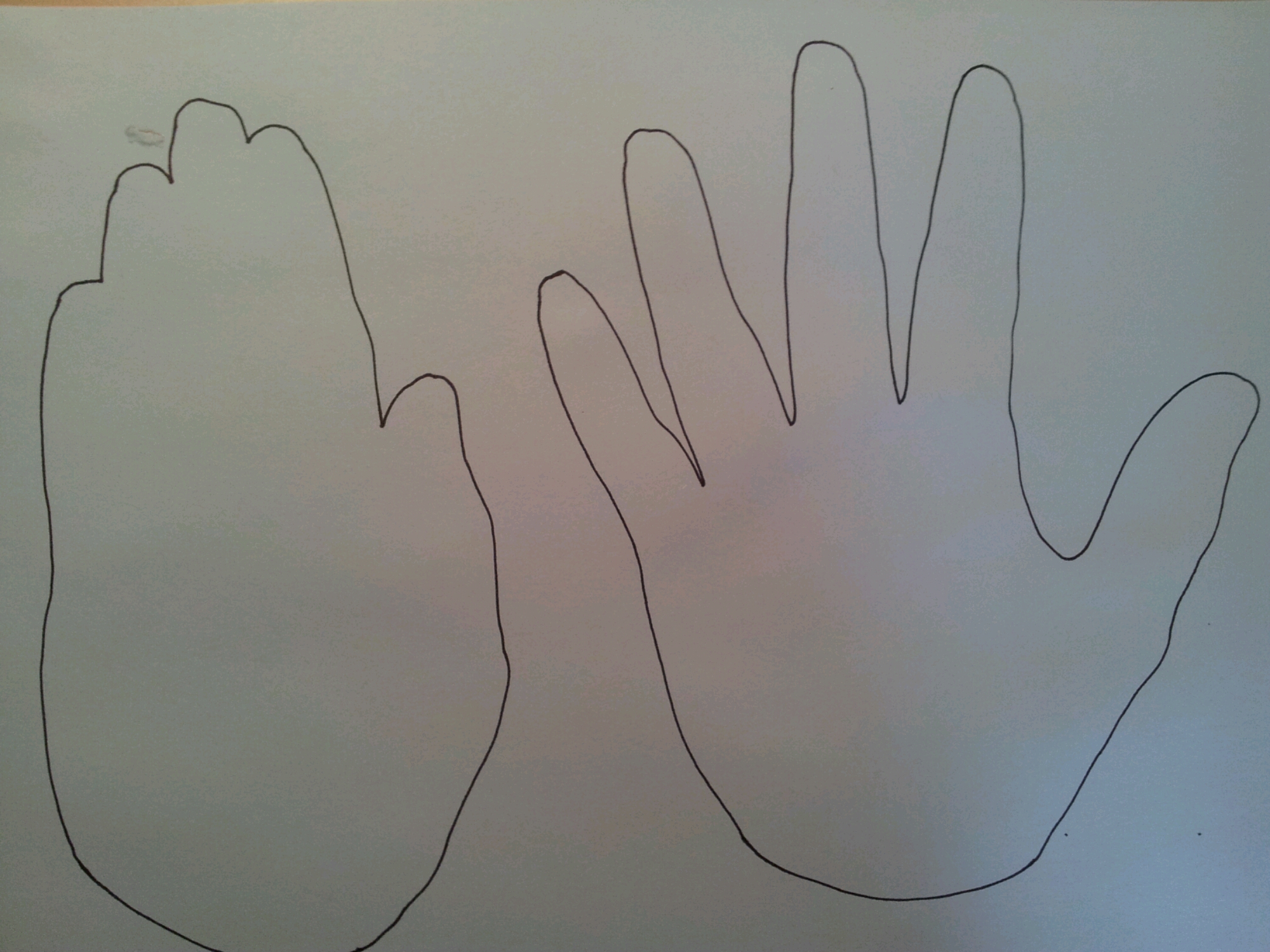
image

(b) Cut out the hands – if you turn them over you won’t see the outlines:
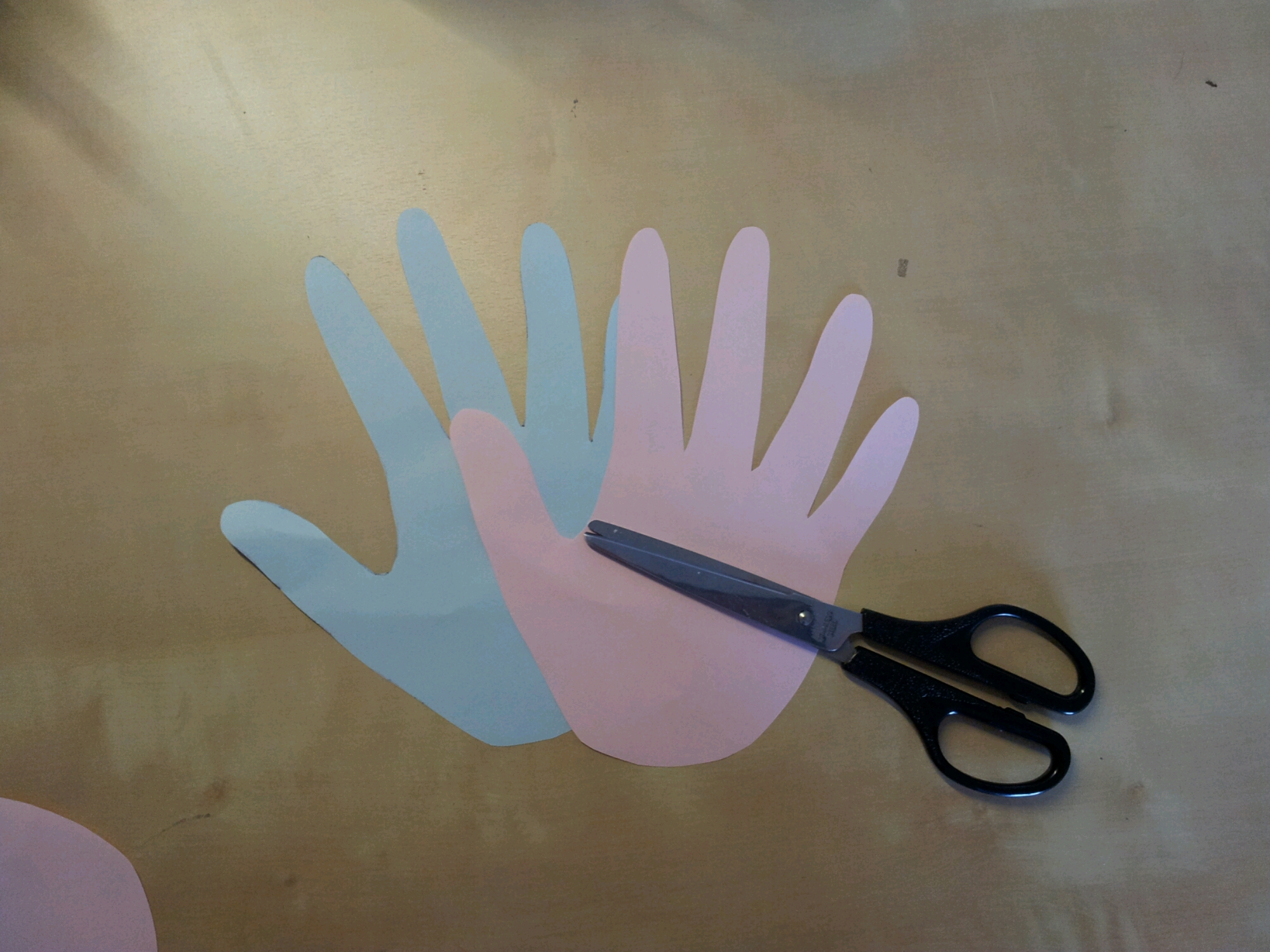
image

(c) You could get the class to use different colours to make it more cheerful. Don’t these look a bit like wings?
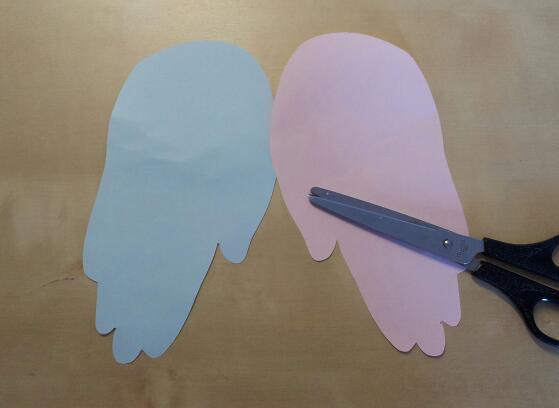
image

(d) The open hands represent a bad habit or trait that students would like to get rid of (or do less). By having the hands downwards the habit is falling out of their hands. Pastorally you could guide students to targets that are appropriate academically or socially. Mathematically these could be study habits or misconceptions. As you can see from the photograph below, it can be tricky getting the wording right – the most important thing is your student understands what they mean.
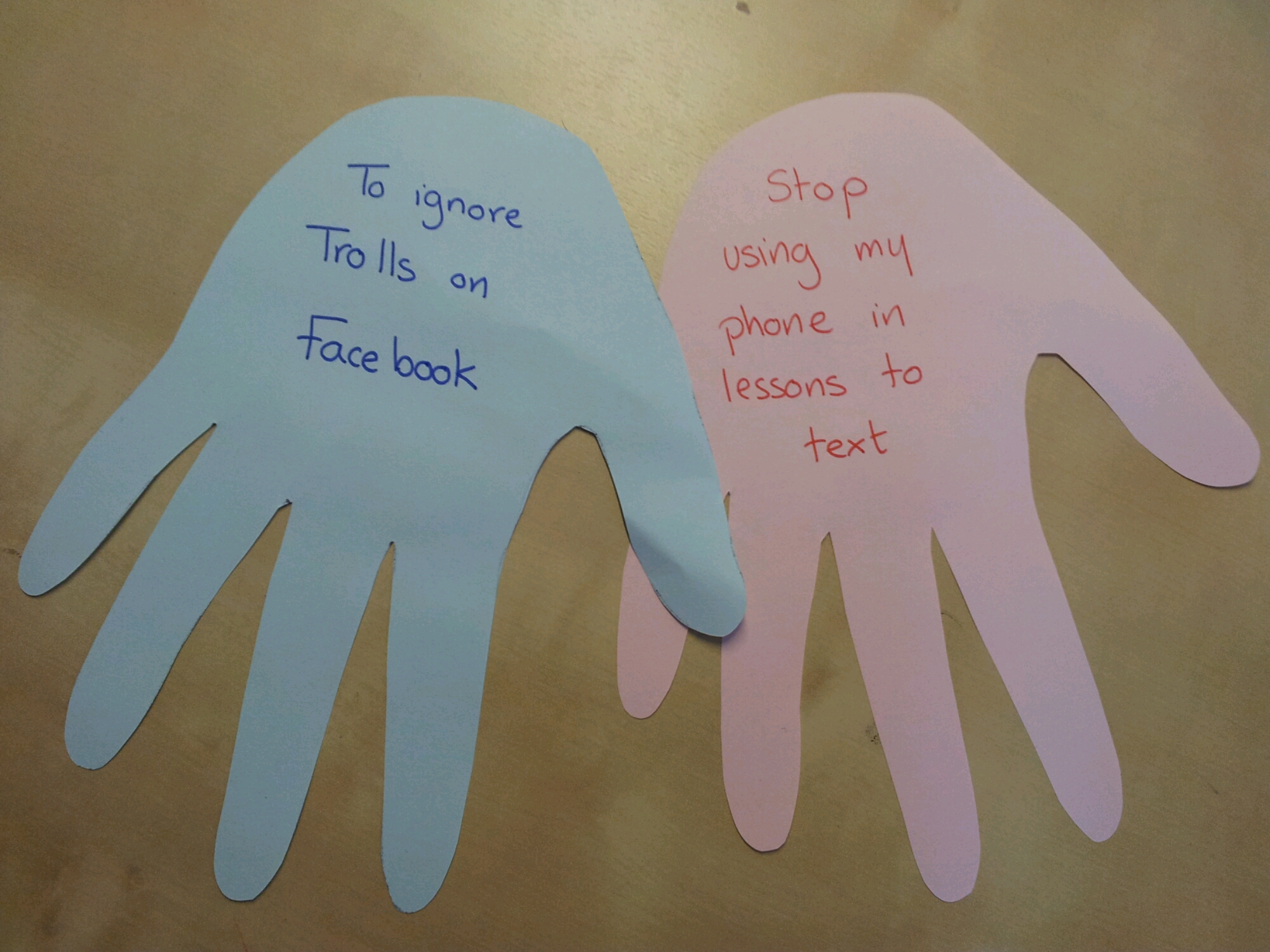
image

(e) As mentioned before, the closed hands when paired correctly look like wings. These are for their positive aspirations and goals. A bit cheesy, but you are letting their dreams have wings! If you have time, students could decorate these flags – they can focus on the positive, not the negative. A few years ago, one of my students did this across two hands and reworded the aspiration as ‘These are the hands of an International Rugby player!’ – a big target for a 14 year old, but by the time he left school he was on the County Rugby team, so who knows …
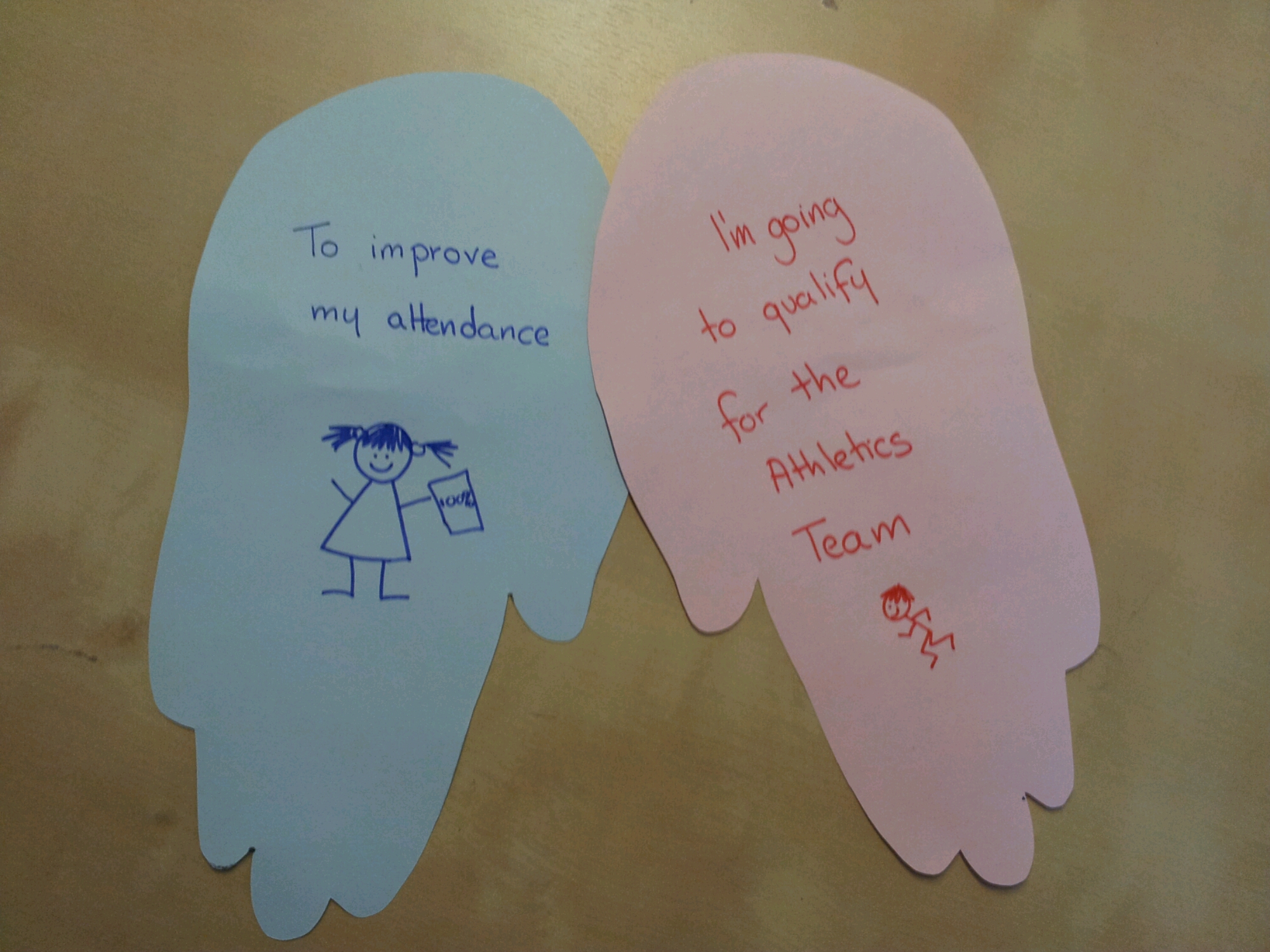
image

(f) Finally string these up around your room. They won’t get in the way of your existing displays and you can reference them throughout the year.

(g) I was also thinking of taking this idea to a pastoral Year meeting and getting all the tutor teachers to do this activity and then hang them in our line manager’s office!

2. Ready made bunting

I happened across the bunting kit in my local Hobbycraft – it usually retails for £2 and includes 25 flags and the string. The link takes you to the relevant page of their website. Similar products are available online from other craft retailers and Amazon.
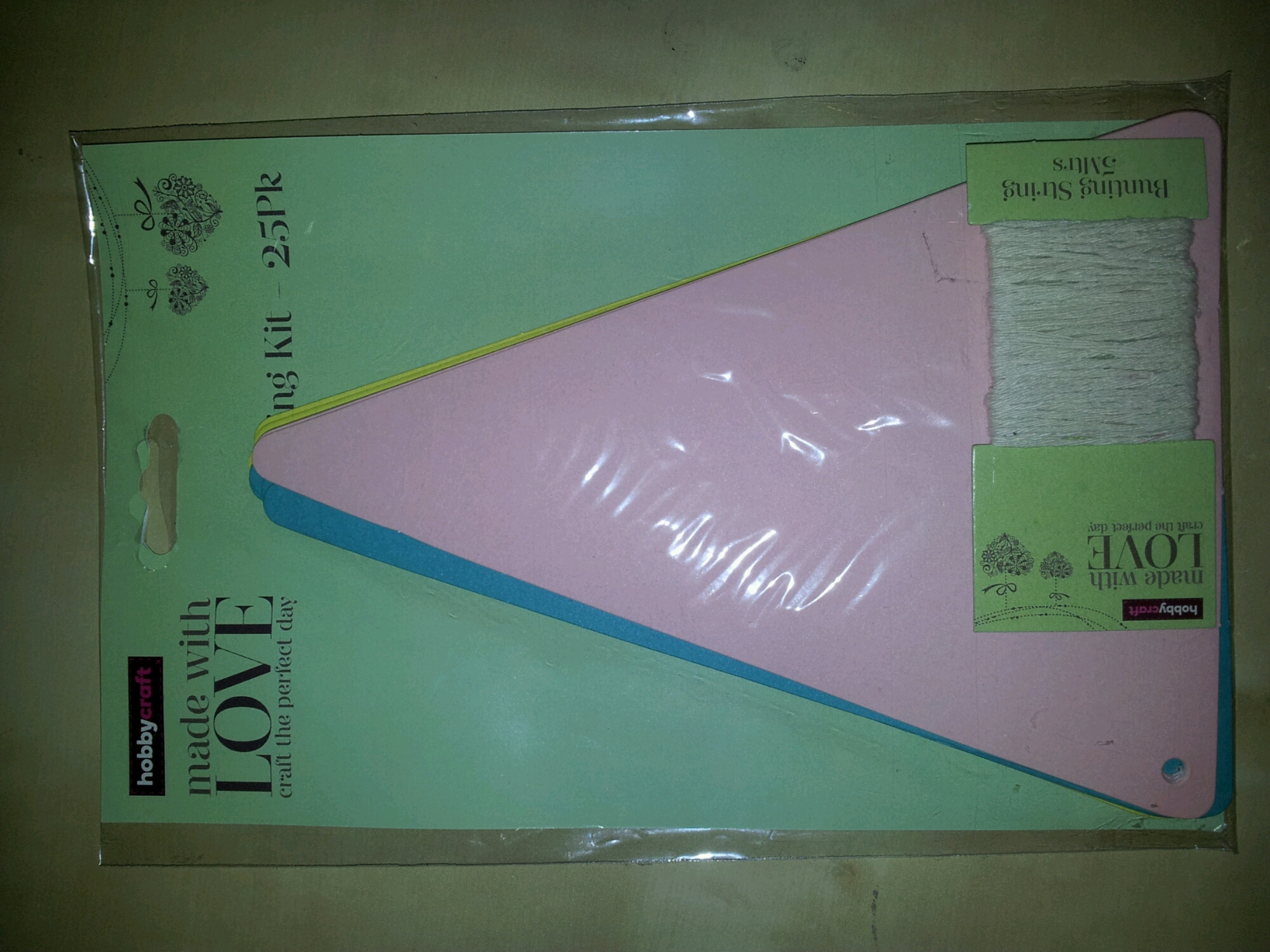
image

So if time is tight or you are a little wary of trusting an interesting class with a practical activity this could be a good alternative. You could put bad habits on one side and aspirations on the other.


3. Teacher made

This bunting demonstrates the beauty (and mathematics) in art from other cultures. The examples come from many cultures including Islam, Buddhism and Christianity and places such as Uzbekistan, Jaipur and Barcelona.
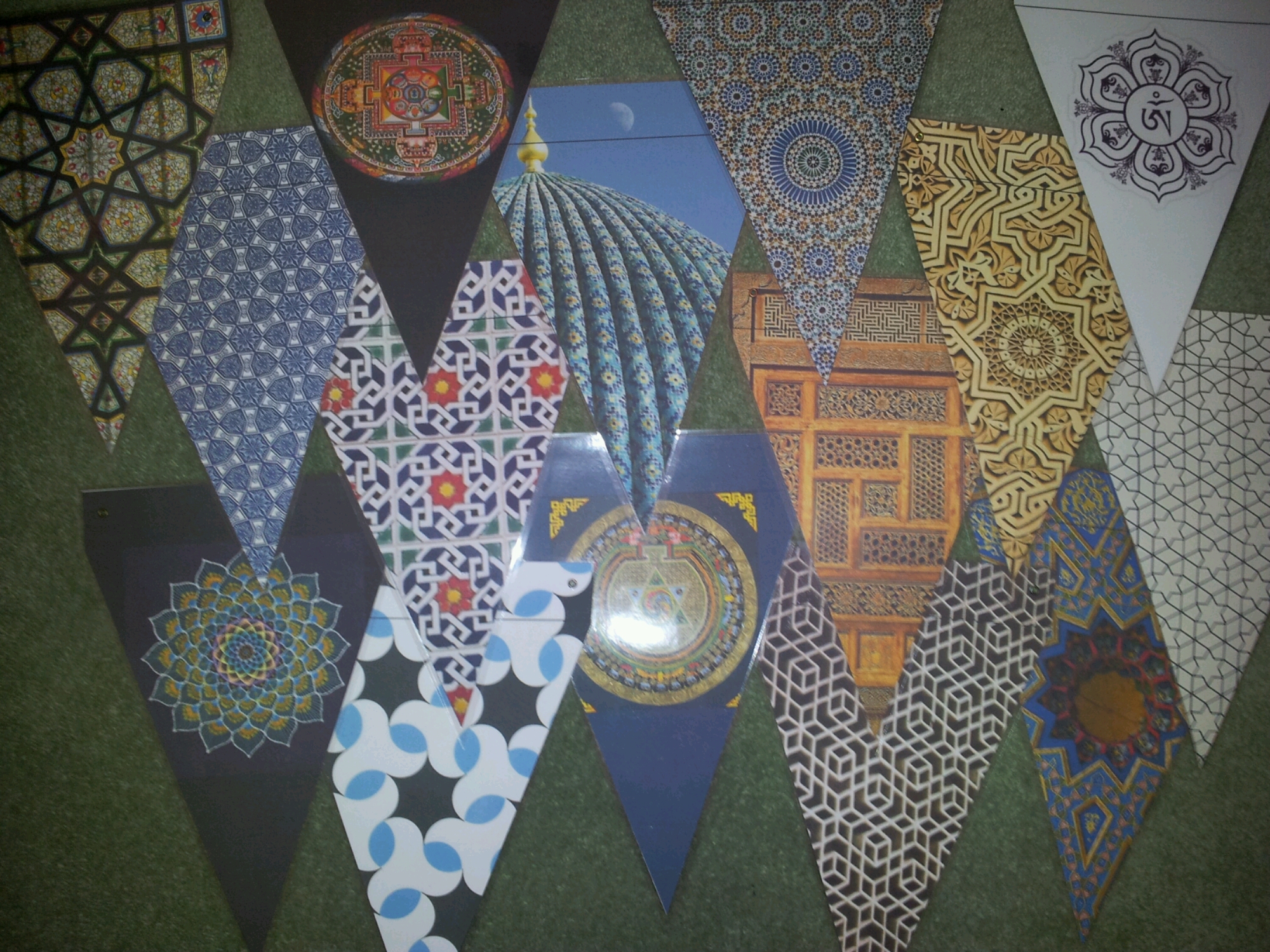
image

The flags are available to download here:

Multicultural bunting (pdf)

Details:

  • Page 1 gives you a blank template
  • Pages 2-16 are images with cutting templates on – they show you the original uncropped images.
  • Pages 17-18 are the image credits, should you wish to use them.

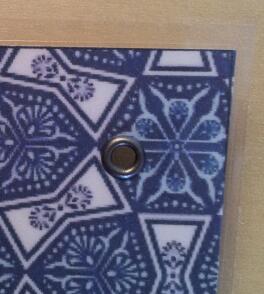
I printed out my flags onto light card, then laminated them. For added durability I put metal eyelets in the corners (see below). This is by no means essential, but if you are interested in card making or scrap-booking, you may well have some of them in your craft drawer.
image

Have a great back to school!

224. No Nonsense Negatives

Ever had a simple idea for a starter which your class just flies with? It happened today for me:

Background
In the previous lesson students understood the meaning of ‘y=mx+c’, but struggled to rearrange equations in this form. With this in mind, I went back to the basics of manipulating calculations.

Starter question 1
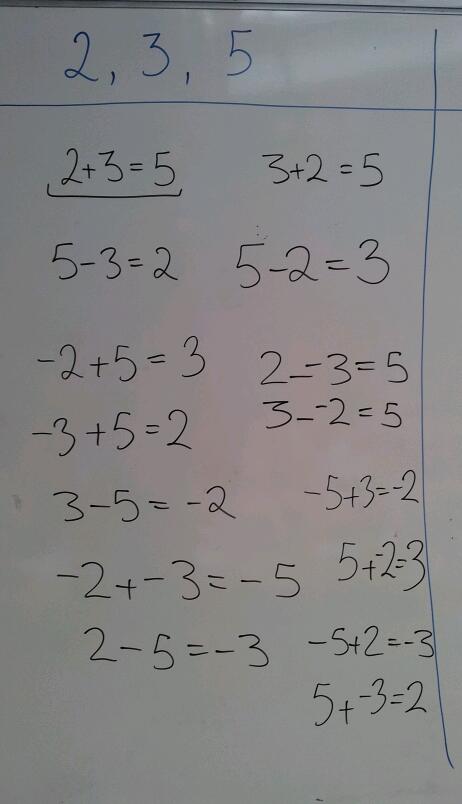
Make as many calculations as you can only using the numbers 2, 3 & 5 (once each) and any symbol you like. The obvious answer is 2+3=5.

Starter question 2
Make as many calculations as you can only using the numbers 3, 6 & 18 (once each) and any symbol you like. The obvious answer is 3×6=18.

The Extension
Most groups quickly found three solutions for each question. Some even used inequalities. To extend their understanding I suggested that they could use as many of each symbol as they wished – would a sprinkling of minus signs increase the number of results?

Results
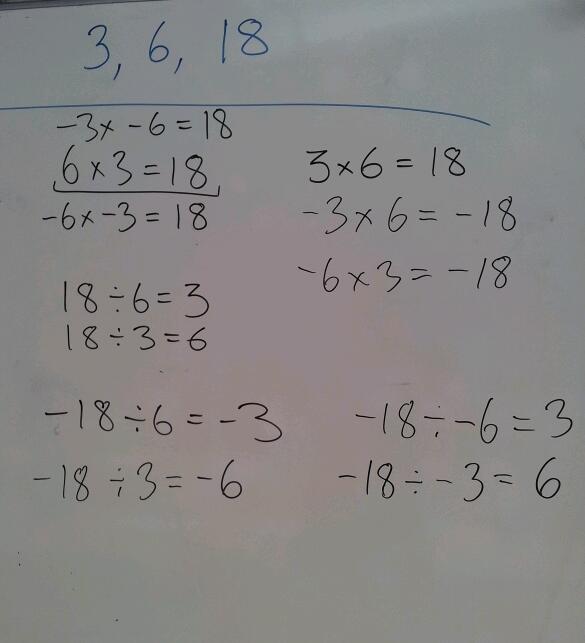
The following pictures show the ideas my class came up with. I was using lolly sticks to randomly pick students and no one wanted to be the first to not give an answer.
image

Followed by:
image

We discussed the rearrangements and linked them to rearranging equations. They appreciated that one equation could be written in many different ways. This activity would work equally well to consolidate negative numbers.